Well … I finally did it … after years of humming and hawing about it, I finally pulled the trigger and changed the name of my Home Brewery. The new name is Cockatrice Brewing! I’m pretty excited about it.
Why Cockatrice Brewing?
Cohesion with My Style: I brew structured, traditional European beer styles (like a Munich Dunkel and German/Czech Pilsners … or Lambics and Monastic Ales). These beers are perfectly suited to the classic, “Old World” authority of Cockatrice Brewing.
The Cockatrice also blends with my current work with Ogopogo: Specifically with the Ogopogo Challenge. Having my own brewery named after another mythical beast (the Cockatrice) creates a powerful, unified brand narrative.
It positions me as the curator of Legendary Beers. lol. Let’s hope!
Ok, Just in case you were wondering, I’m still around. lol. I apologize for the long time between posts — I have absolutely no excuse — however, I have still been exploring the World of Beer during this time. This year, 2021, I’ve determined to focus on Belgian-style beers, with an emphasis on two categories: a) Trappist-style, and b) Lambics.
For this post I will stick to discussing the Trappist-styles, leaving Lambics for a follow-on.
The two ways I’ve been focusing on Trappist-styles are a) drinking them (haha) and, b) brewing them. I’ve already brewed a “Single/blond,” a Dubbel, a Tripel, and will be brewing a Dark Strong Ale tomorrow.
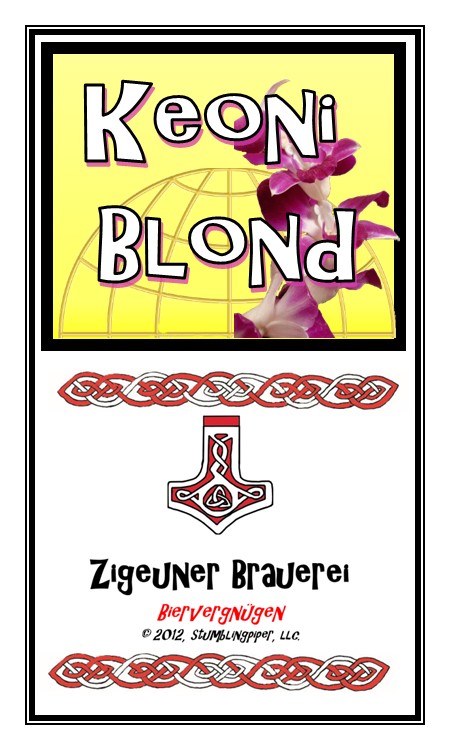
The Single/Blond Ale was a strange brew … it was hard to characterize it … the yeast I used had been cultured from an Achouffe strain (WLP550) [of course, that’s like saying I came from Europe even though my family has been in the USA since the 1700s] — so not a Trappist yeast. Originally, I wanted to clone the Poperinge Hommelbier … I put together my recipe and brewed it up — it is (characteristically) like the Trappist Single but the ABV is too high for that style … but too low for the Strong Ale category … Oh well! It tastes great. I love that yeast! I brewed it on the day my Grandson was born — so I named it after him (Keoni Blond) …
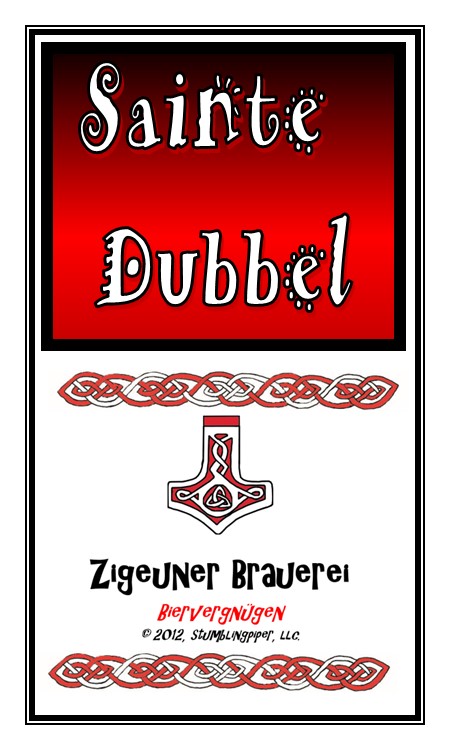
Before I brewed that one, I brewed “Sainte Dubbel” … this was my attempt at a Westmalle-clone. I used the WLP 530 yeast … definitely the right strain. I did have an uncontrolled temperature spike the first night, but everything came back under control … the flavor is very similar to the Westmalle Dubbel … however, it lacks that subtle oxidation character … it needs a little more time in the bottle, I think.
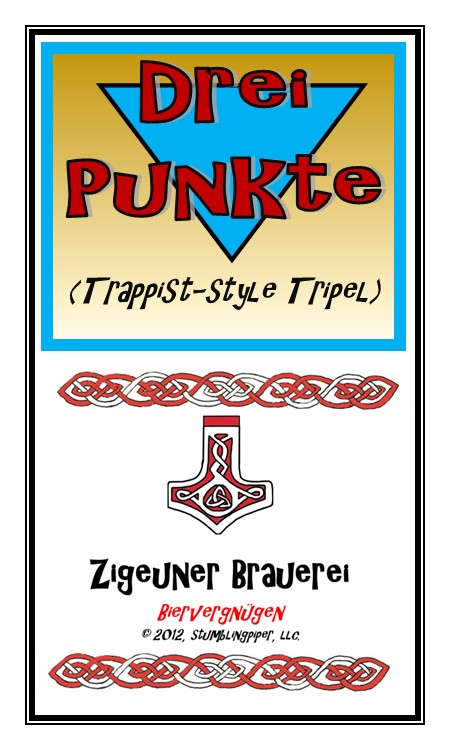
The next beer I brewed was the Drei Punkte … my Trappist Tripel … I went for another Westmalle-clone … maybe leaning a little towards the Chimay. I’m still trying to dial in my new brewing system … more about that in another post … so I didn’t hit my targets, but this is a nice Tripel. I used the WLP 550 yeast (I captured some from the Blond-brew). It is a very nice yeast … great flavor profile in both of these beers.
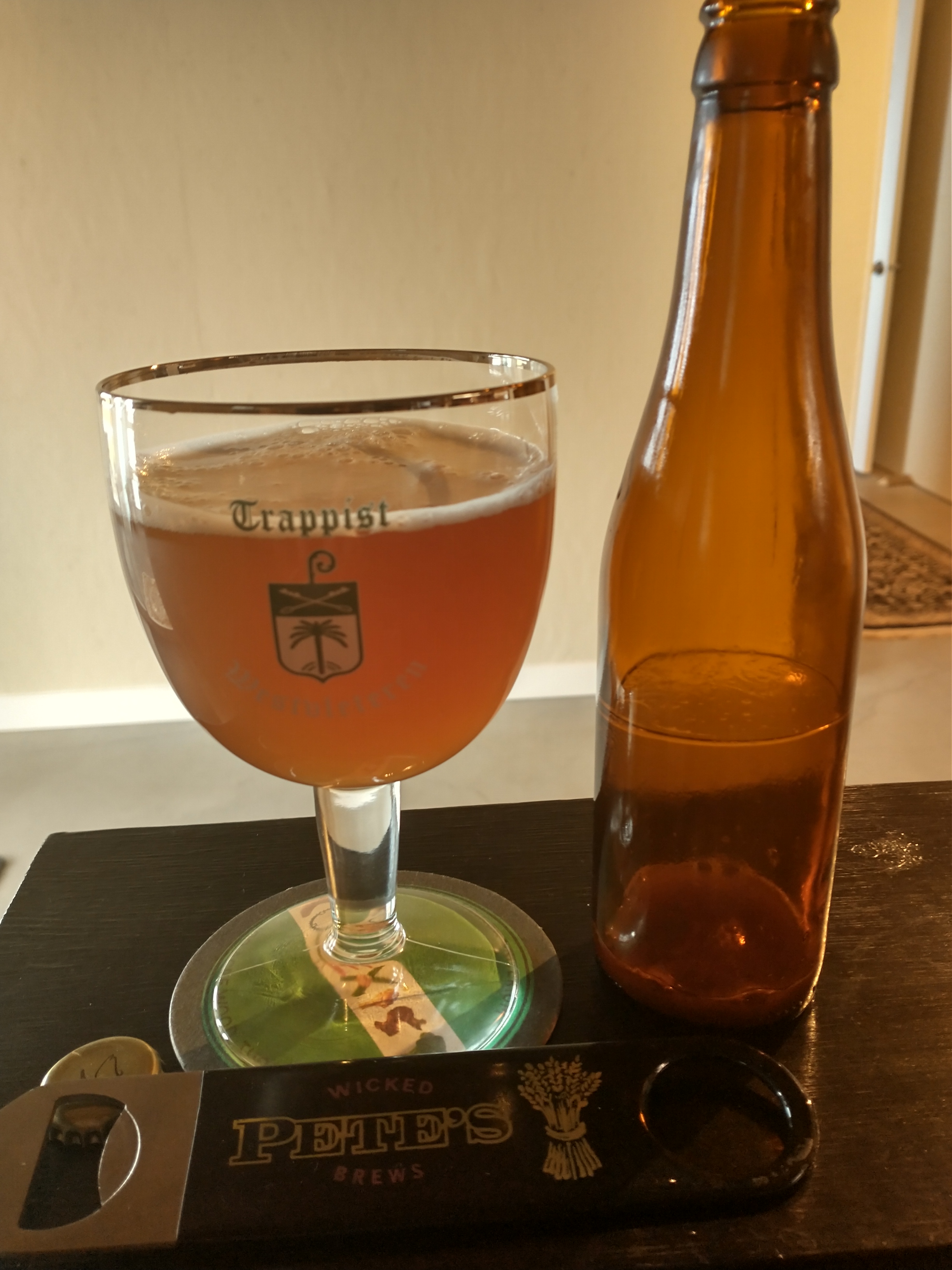
A couple of bottles seem low in carbonation, but the rest are a nice, big thick head. This is obviously a low carbonation one … haha.
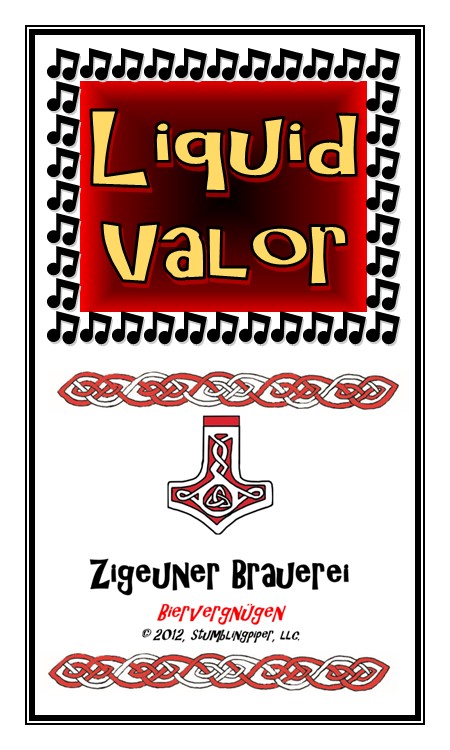
Besides brewing these Trappist-styles, I’ve been able to find bottles from Chimay, Westmalle, Rochefort, and Orval. Also, the St Bernardus Abt 12 and few other Abbey beers. As my beers mature, I’ve been doing some side-by-side comparisons. Additionally, I’ve captured the dregs from a few Orval bottles (my favorite beer). I’m using these in two different ways. First, I captured some of the wort from the Keoni Blond and pitched the Orval yeast into secondary … definitely getting that Brett character … needs to mature a little more, but a really tasty beer. Also, my next beer (after my Quadrupel) will be my attempt at an Orval clone (hence the Label for “Liquid Valor.”) I haven’t designed my Quad label yet.
Here’s a shout out to Stan Hieronymous — his book “brew like a MONK” is a great reference guide when I’m trying to build my recipes, choose yeast, additional ingredients and what processes to follow. Thanks, Stan!
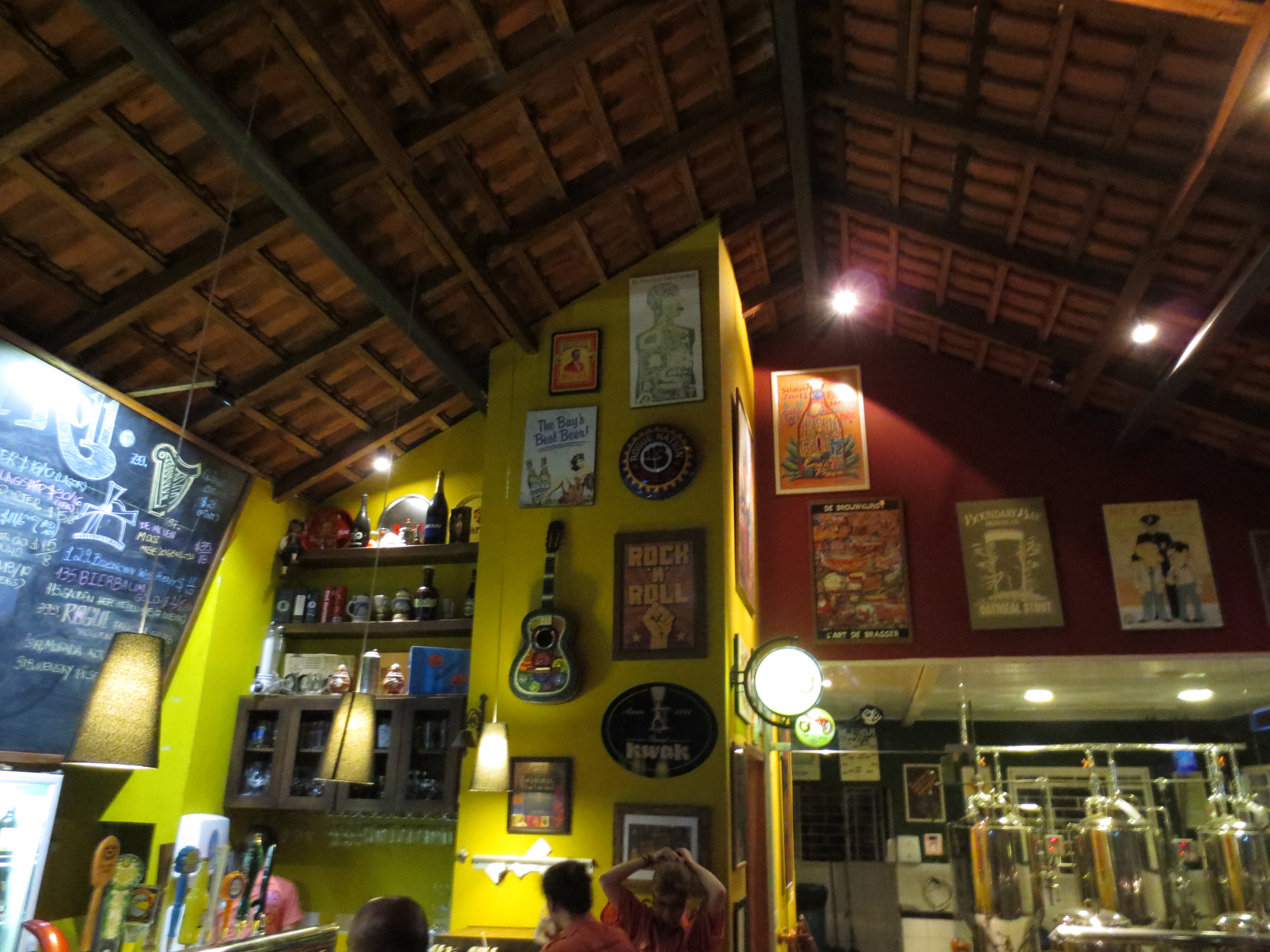
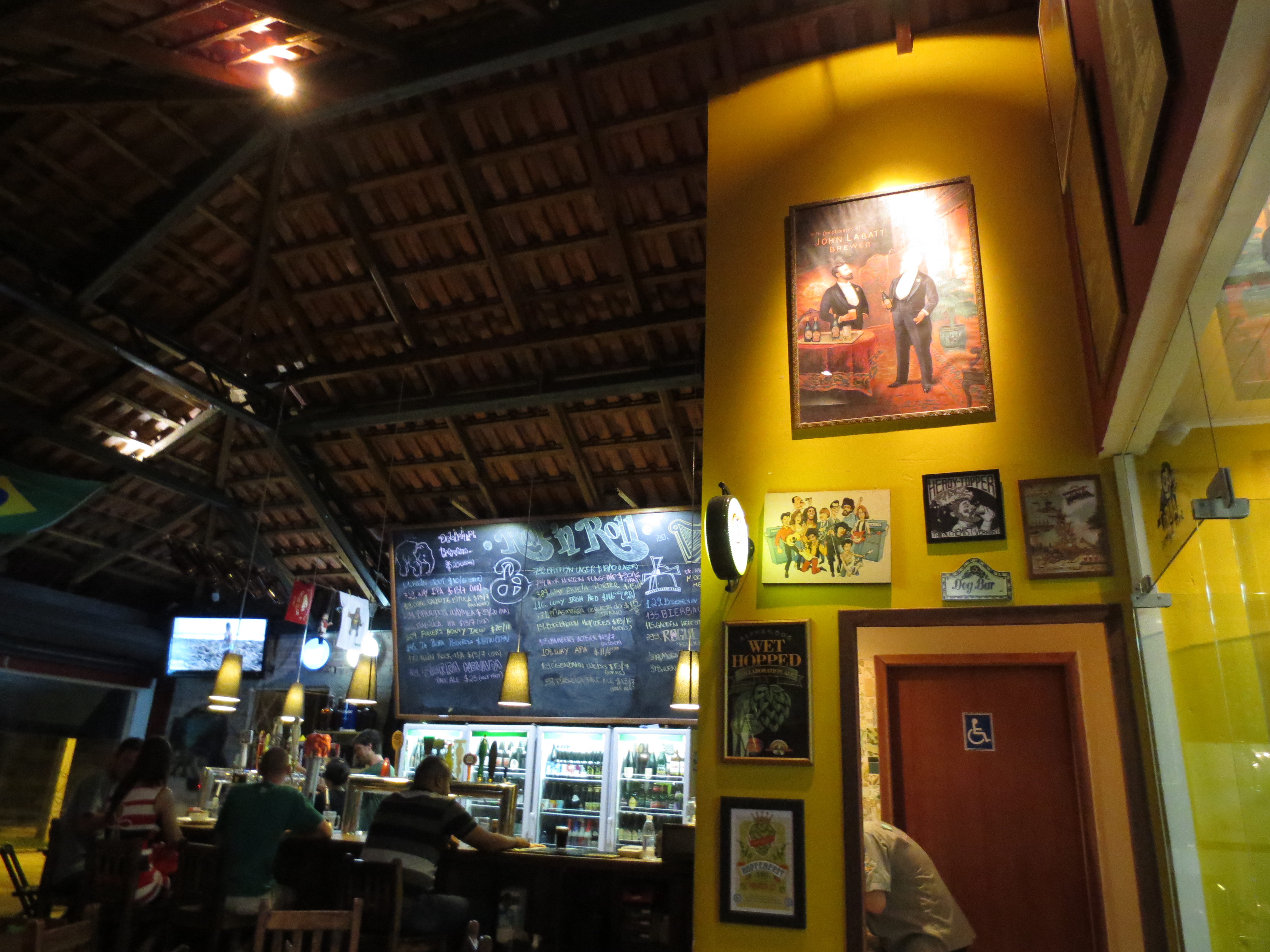
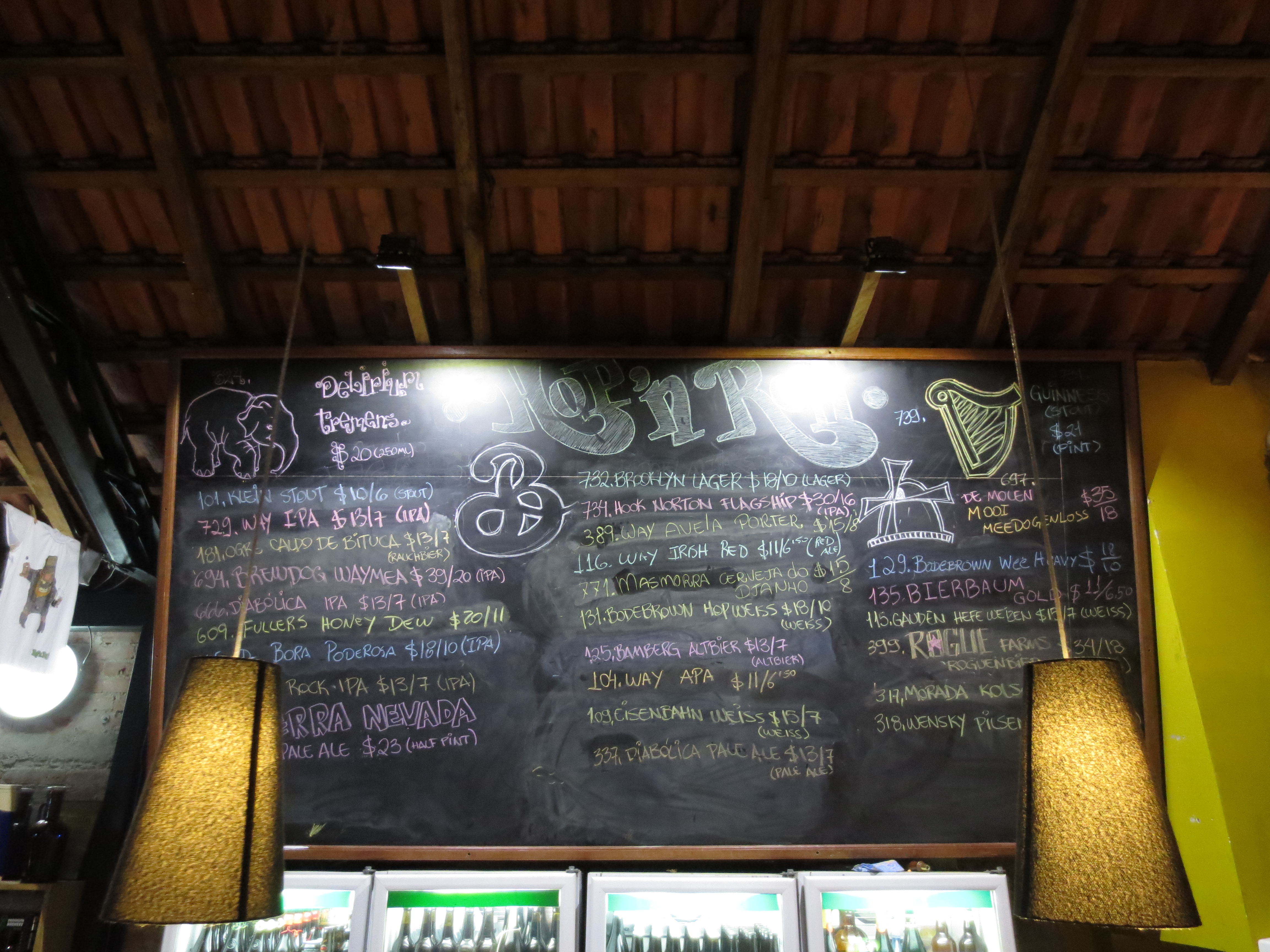
I visited Curitiba, Brazil (a city of 5 million) last week and my girlfriend and my new friends took me to a Cervejaria … Hop n’ Roll!
Who knew Brazil was starting to brew beers other than Lagers?? Actually, Brazil is the fourth largest producer of beer (recently surpassing Germany in production). Apparently there are microbreweries in all of the large cities … some notable ones are Cervejaria Colorado and Choperia Baden Baden.
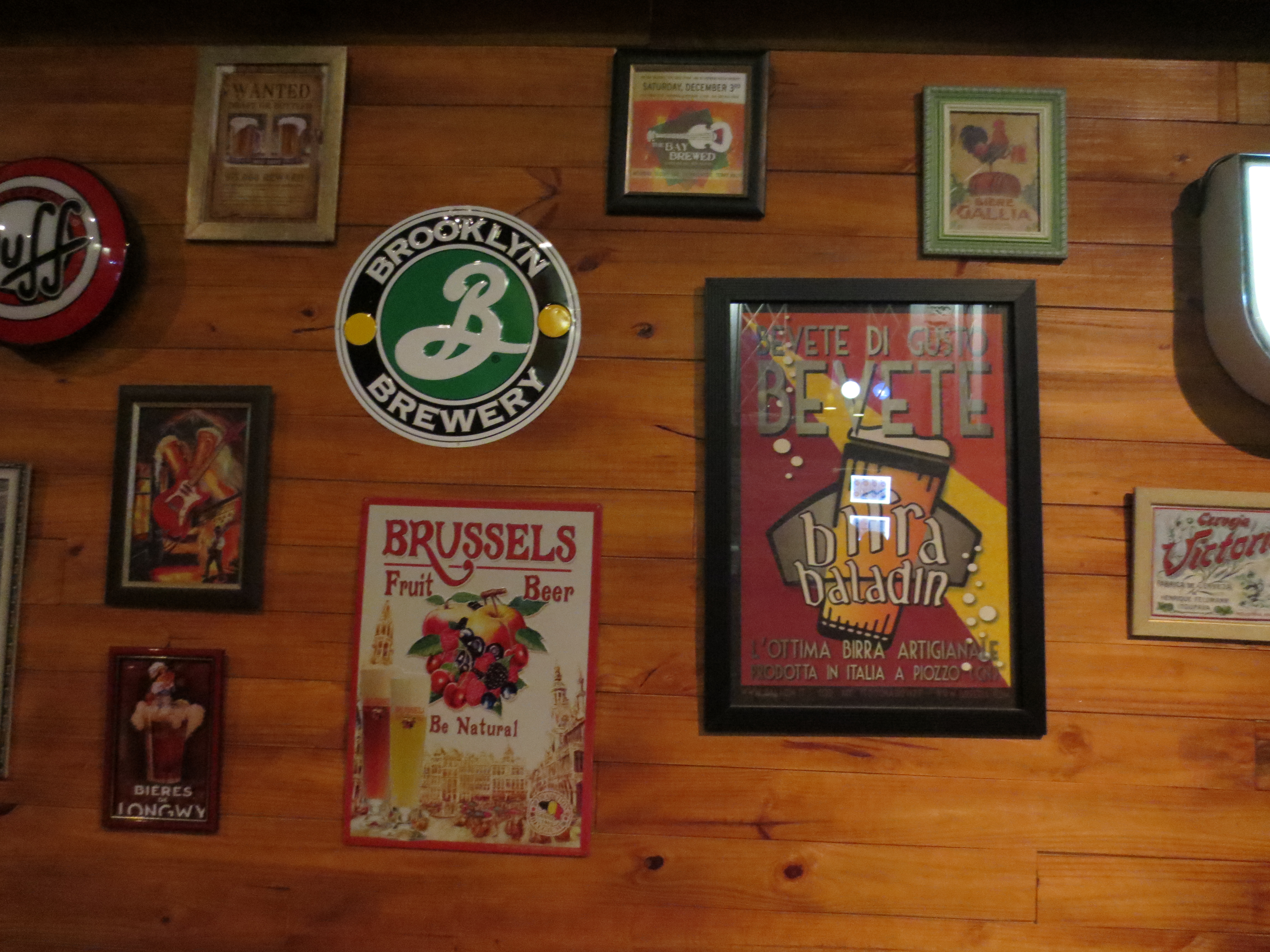
This was a very cool place — great layout and decor … check the photos here. They had an outdoor beer garden and a nice indoor pub. They had parking in the rear … no problem.
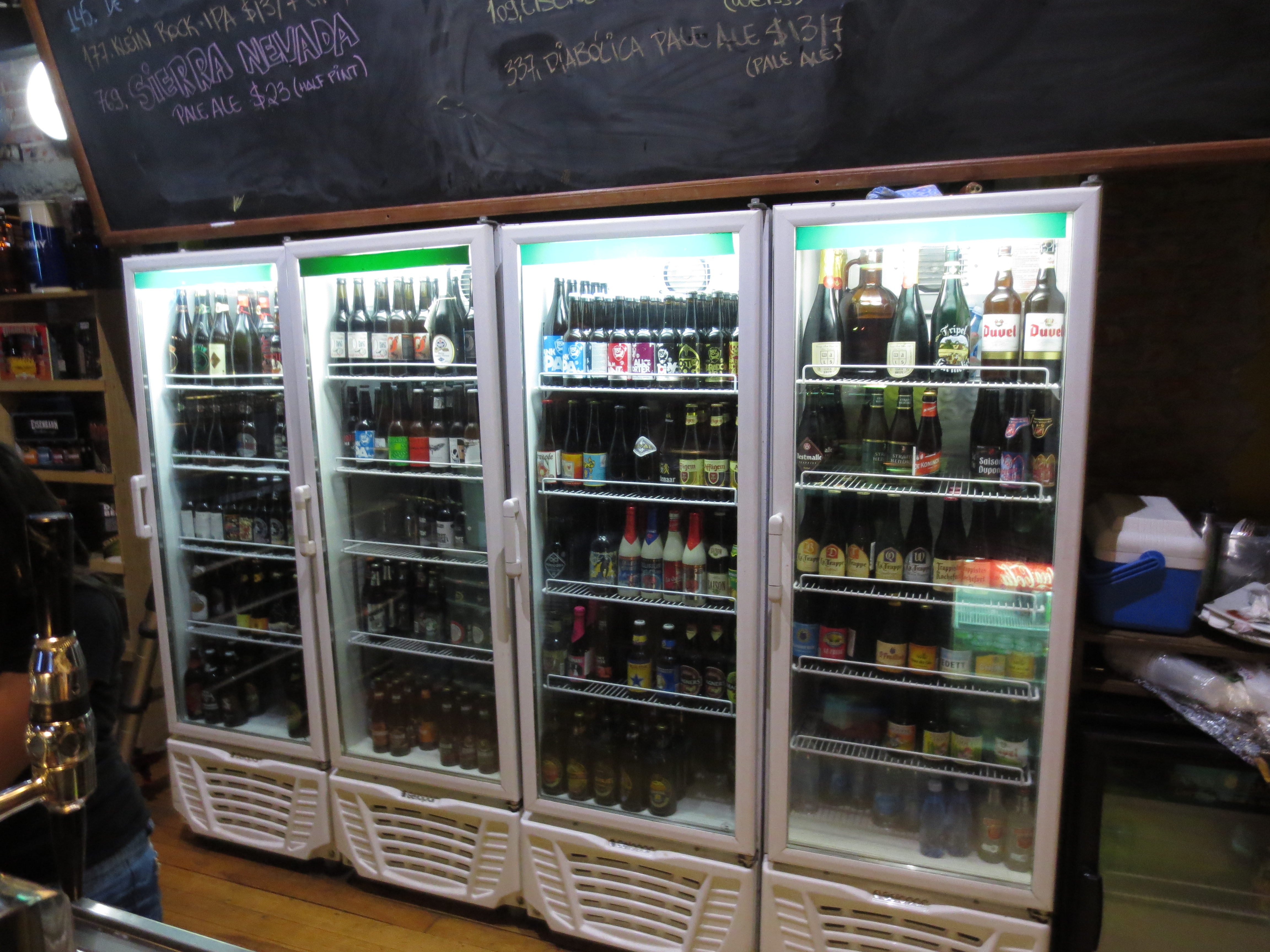
Great artwork. Below pictures show the chalk board with the available beers. You could get local craft beer, American microbrews, and several Belgian options to include Trappists. Really a nice selection of beer!
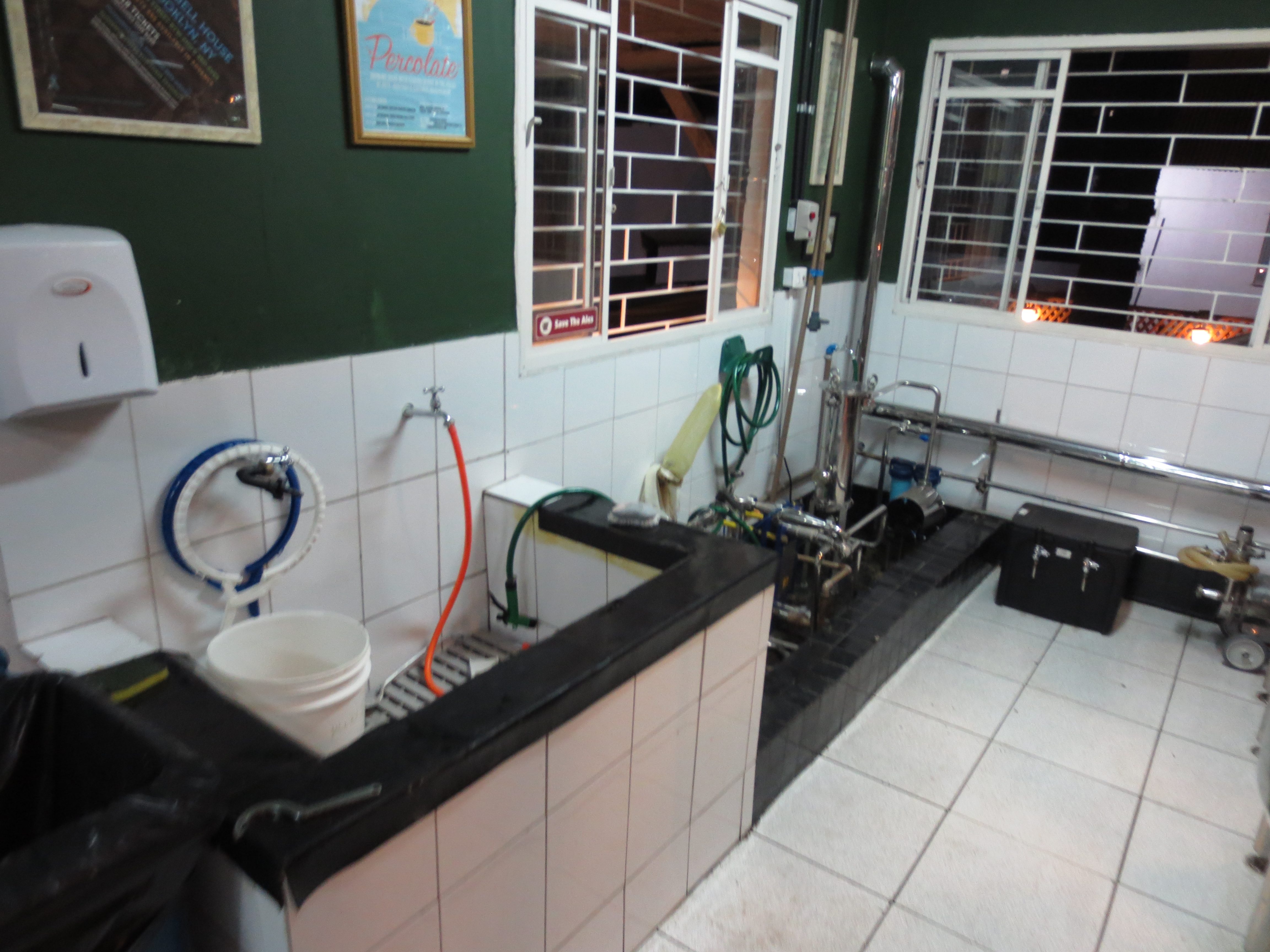
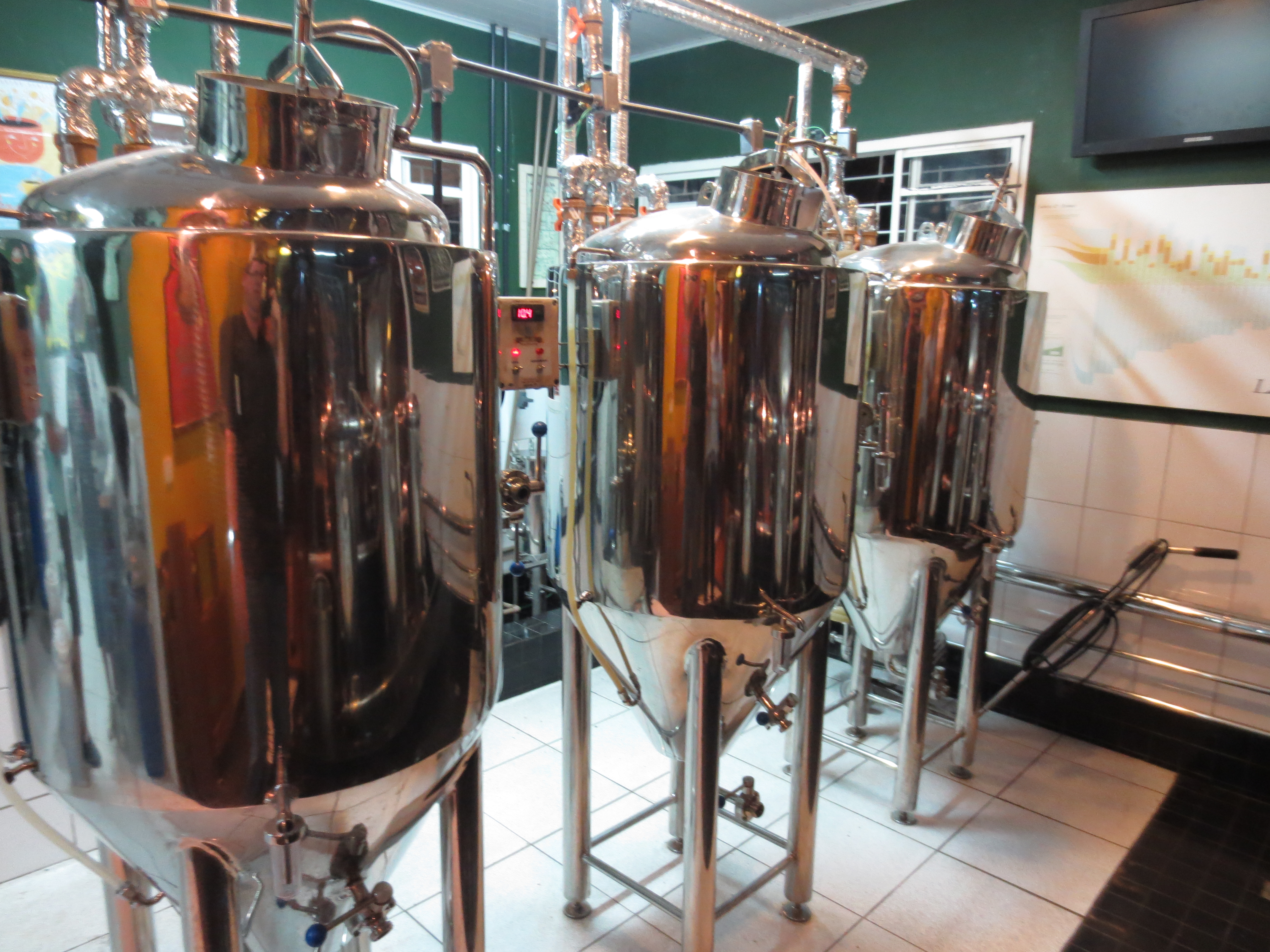
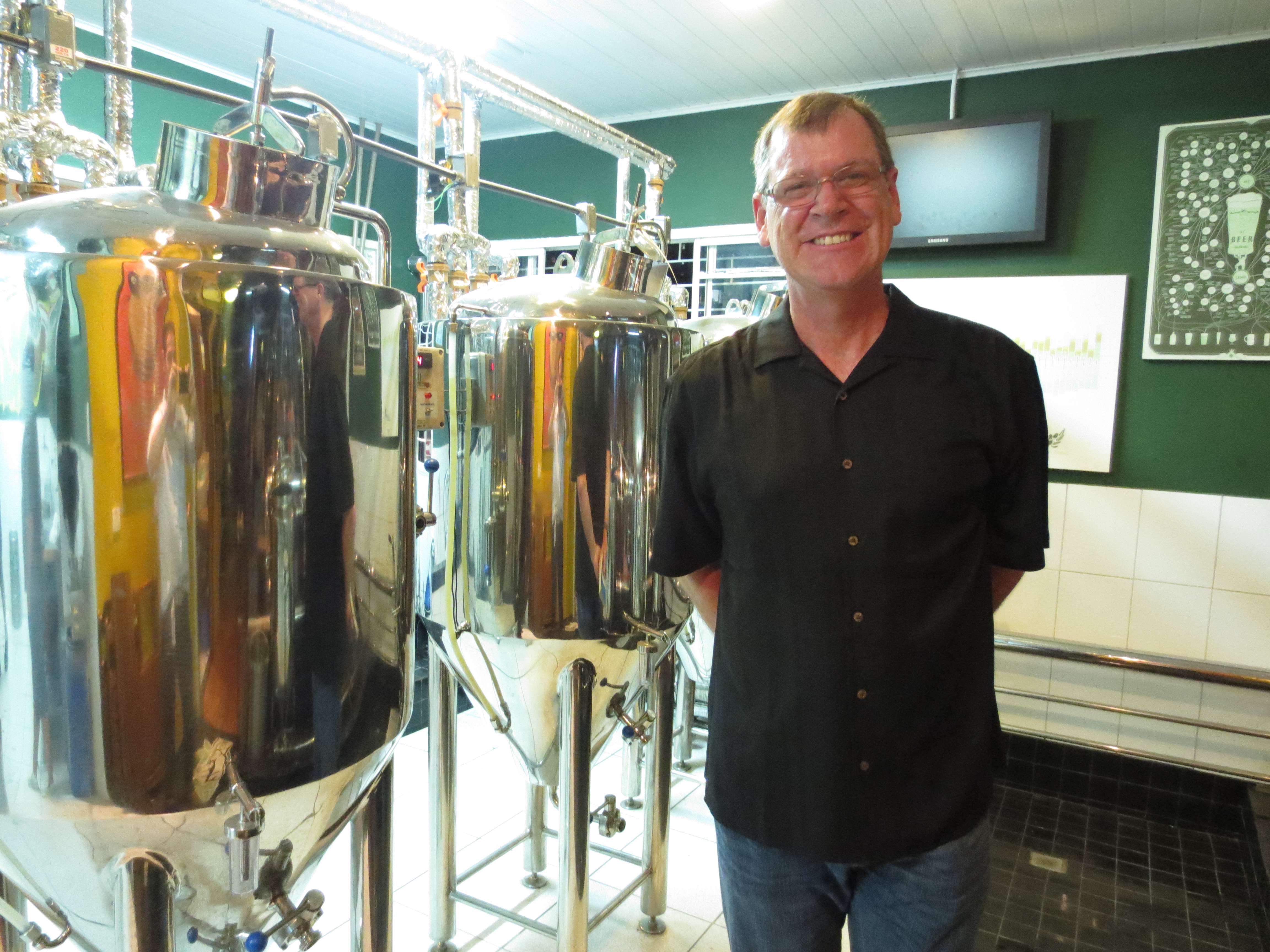
Not only could you drink there, you could also brew! They had a brew your own set up … it takes about 4 hours — if we had more time I was going to brew a batch for my friend to drink later. Here’s a few photos of the setup …
I can’t say enough about how nice the folks were — great location. The food was good too. They had an interesting way of tracking your consumption (thank goodness for my Portuguese dictionary … haha). Here I am paying the tab … inexpensive too … $58 for all of us to have a bite and drink a few beers. Very nice. If you are in the area, stop in for a brew!
Decided to enjoy a homebrew tonight for my 4th beer. I made this beer in July and it has mellowed out nicely. As an English Pale Ale it is not over-the-top hoppy but it has a nice bite on the back-end. There’s a few more left … want one??
This is the first of several “Retro Posts” … you probably are asking, what?? I’ve got several brewery, bar, beer visits I need to update in my blog but I’m like 2 years behind! So I’m going to put some … Continue reading →
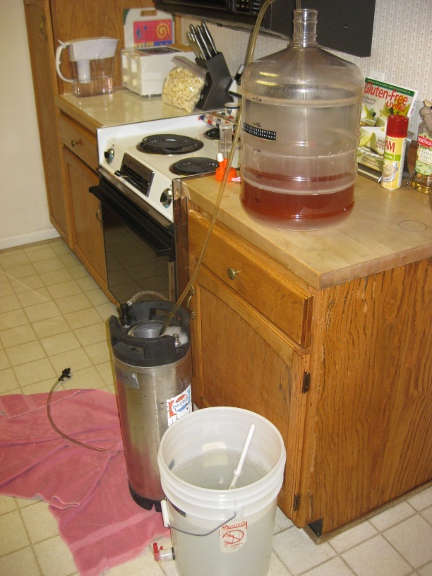
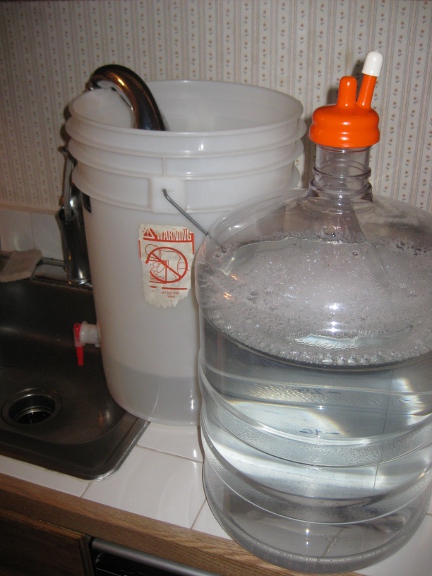
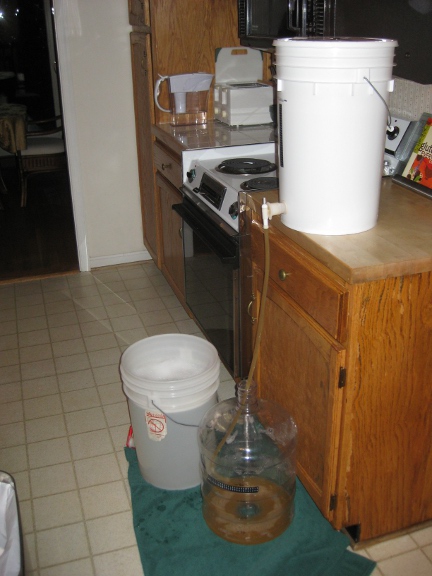
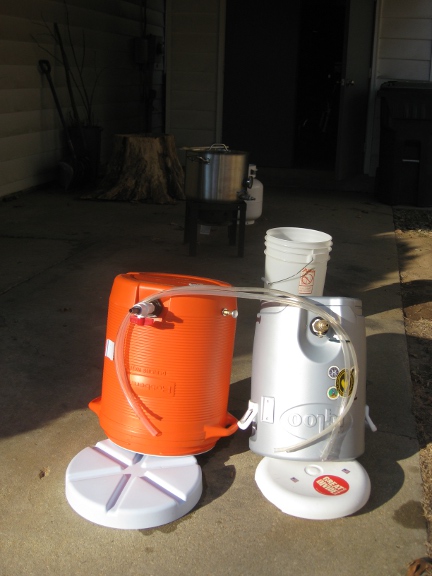
I had the time on Wednesday (2 Mar 2011) to keg my Witbier, so I hustled up the equipment, sanitized it, and kegged that baby … Here are a couple of pictures of the “transfer process.” You can see some suds in the 3rd picture — that’s my sanitizer residue …
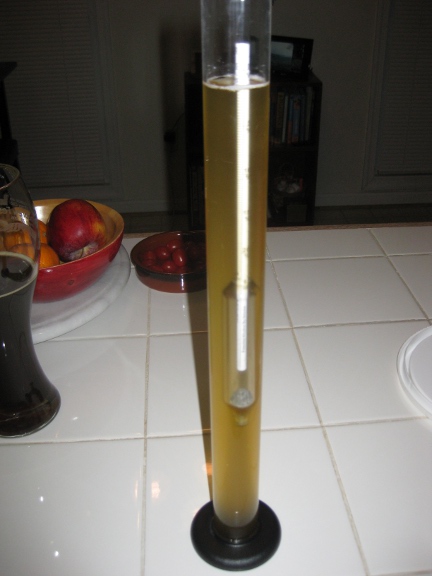
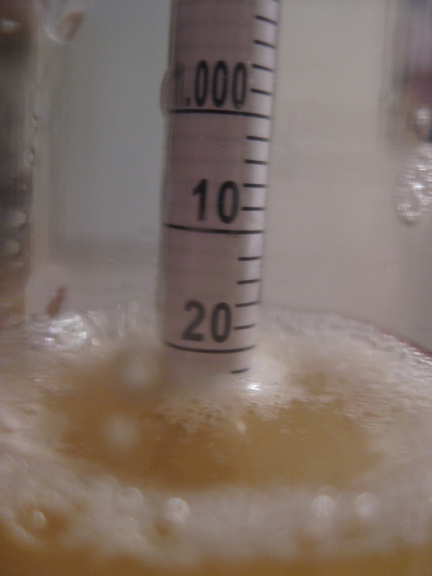
It really cleared up well … of course, it’s been in secondary fermentation since early February (February 10th). So, from 23 Jan until 2 Mar in the fermentor — 38 days in the fermentor … at a temp of approx 68 degrees. You can see the final gravity in this picture:
With correction … I read a F.G. of 1.010 at 68 degrees … that corrects to 1.010. So, with the O.G. of 1.051, I ended up with about 5.3% ABV. My mash efficiency was around 72% … I may have mashed too quickly. The attenuation was about 63% … may have had something to do with my yeast age.
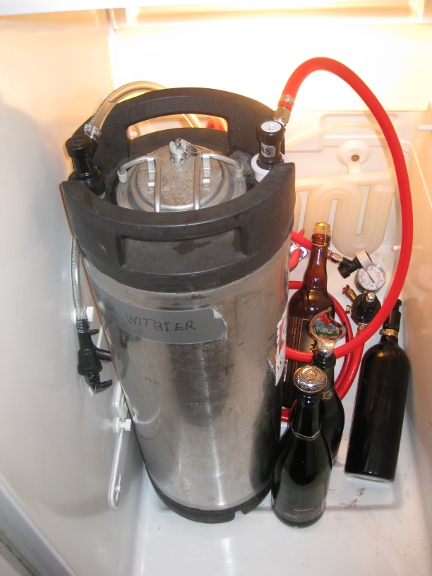
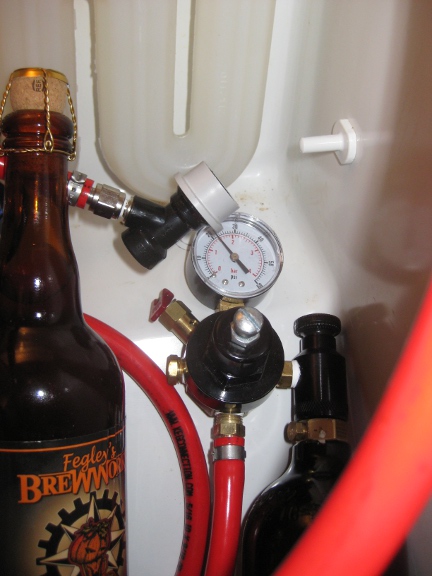
You can see my CO2 cartridge here — it is a 20 oz paintball tank — works great! I’ve got two that I swap out, but they both last a long time. You can see in the 3rd picture that I’ve got the pressure kicked up and am force carbonating it in the fridge. I just had a sample today–it is carbonated nicely … I’ll probably leave it at that pressure for another day or so and then move it down. I’ll post a couple of final beer photos. And, as usual, there’s always some clean up to do!
I finally racked my Belgian-style Witbier to the secondary fermentation “tank.” I left it in primary fermentation for 15 days … seems a little long, but it kept being active. I think the temperature stayed between 68 and 70 degrees pretty much the entire time (except when we lost electricity and the temp in the house dropped to 54 degrees … then it was a little cooler! <smile>).
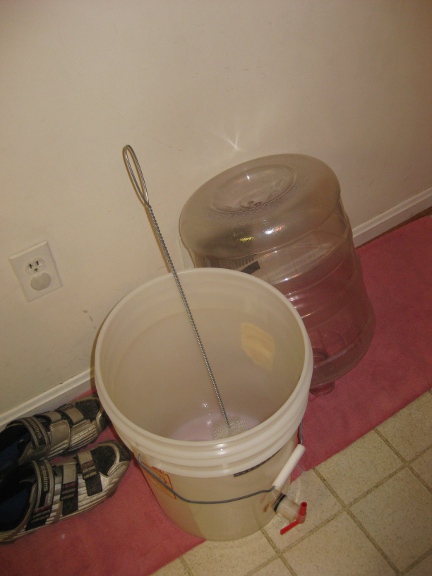
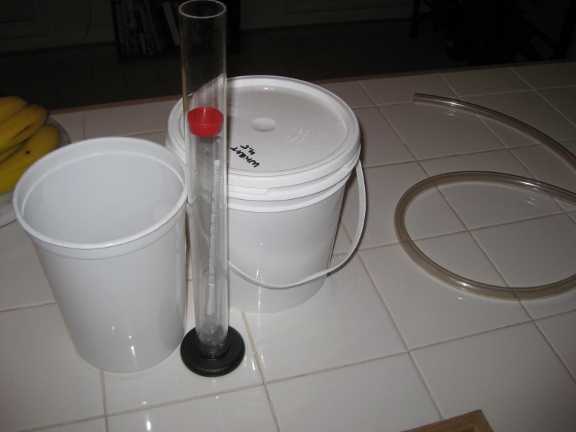
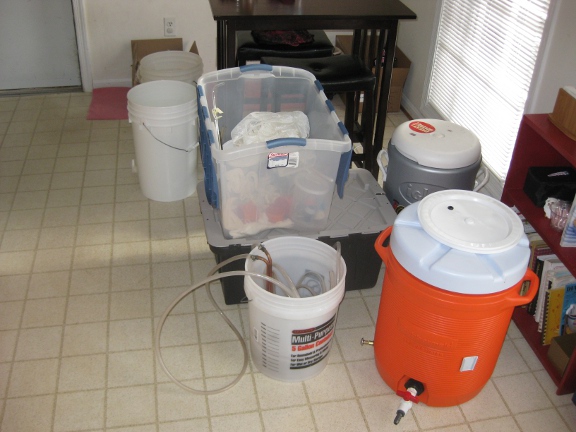
The first thing I did was prep and sanitize the equipment.
You’ll notice that I use a “Better Bottle” as my secondary fermentation “tank.” I typically use the “bucket” for primary fermentation because it always makes it easy to transfer (and clean up). You can see that in these pictures — you can definitely see what I have to clean!
I thought the color was right on … of course there’s still some fermentables (and other stuff) suspended in the pre-beer … it will clear over time … but check out the color here.
Also, you can see that the Specific Gravity is 1.024 (approx). My target Final Gravity is 1.010 … again, I think I have some suspended particles that give it a little higher gravity; however, it was still bubbling away after I transferred it. Of course, you always want to tast the intermediate “beer”–it was delicious. I can’t wait for the final product!
This Friday I was fortunate enough to attend the Open House for the newest Production Brewery in the DC area: Port City Brewing. Actually, I had the day off Friday, I was looking for something to do–a friend of mine had mentioned there was a new brewery opening in Alexandria but he couldn’t remember the name. Google here I come! I saw this article about it in the Washington Post and thought I could pick up a Growler around lunch (I thought they were already open)–The article mentions that their Belgian Wit would be available — and since I’m currently brewing a wit bier I thought it would be a great opportunity.
I showed up around noon and they were obviously not open. I was able to poke my head in the back and (fortunately) one of the brewers told me their open house was at 4pm.
I showed back up at 4pm and, sure enough, they were open!
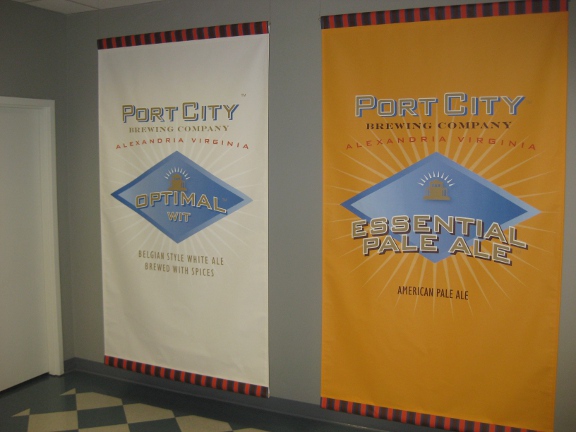
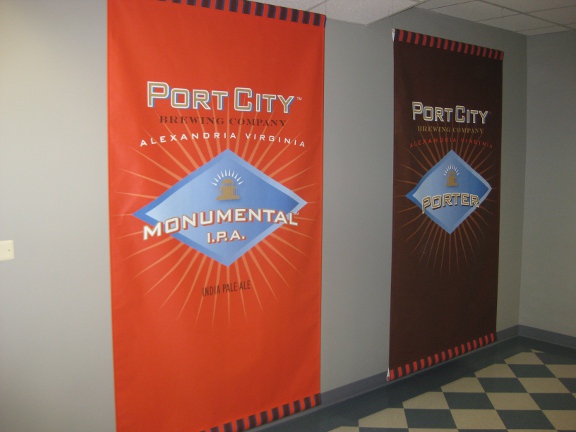
They had two of their four flagship beers available for tasting (see picture above). Here are the images of the four beers:
The beers were quite nice — I even brought home a growler of the Pale Ale. Yea, refill for $10 baby! I was impressed with their setup, operation, and the fact that they were very nice (that’s always a plus in my mind around DC!). The owner gave us a short tour of their brewery. Here you can see their base grain storage silo and a shot of where it comes out of their grinding room.
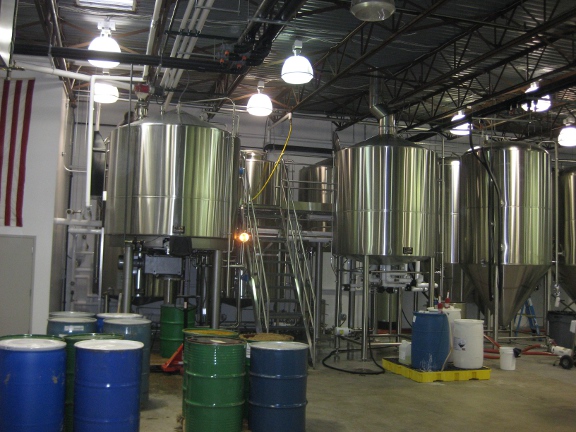
They’ve got a very state-of-the-art brewing system. Here you can see their mash tuns, kettle, and their 30, 60, and 90 barrel fermentors.
These tanks in the below pictures are their staging vessels for kegging and (soon) bottling. Just to the left of the tanks you can see their cold storage facility. Since their beer is not pasteurized it needs to be kept cool. These tanks will also be used (eventually) for lagering.
They are nearly ready to begin bottling–here’s a shot of their bottling equipment. An interesting anecdote that may actually interest only me: they picked up this bottling equipment second-hand from the Southern Tier Brewing company. That’s another plus in my mind — I love those Southern Tier guys!
Finally, I overheard that their witbier is already on tap at Churchkey. They have it at a few other spots–but I don’t remember where. Their WitBier and Pale Ale are ready now. The Porter is next with the IPA following close on their heels in a couple of weeks! I can’t wait! Welcome to the DC area, Port City Brewing!
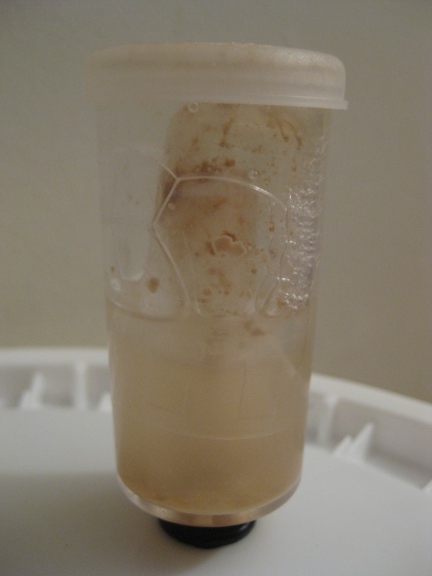
Just in case you were wondering if my yeast starter/brew session kicked off “OK” see the photo of my “airlock.” It went so big that it “Krausen”ed right into the Airlock!
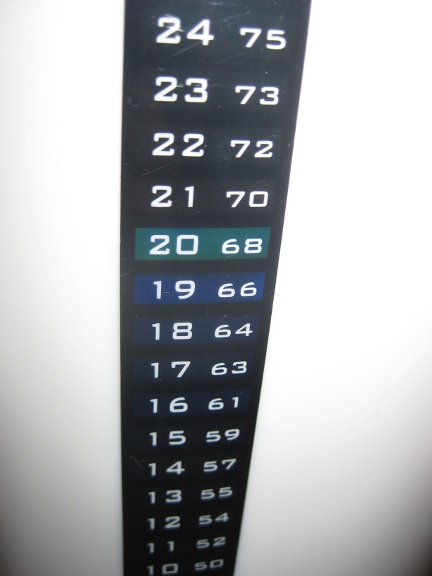
What’s even more interesting is that I put it in the warmest place in my house, and the temp is still holding steady at 68 degrees … yeah, it’s been a little cold around here.
Should be transferring to secondary in the next few days!
My friend, Brian, came over today and joined in a little brewing and beer drinking. It was time to put all the pieces together and get the first brew of the year done. These first few pictures are of the initial preparation: equipment set up, measuring and note taking–making sure I have it set in my mind how and when to get things done.
For those interested, here is a list of the ingredients and a general rundown of my recipe:
This is a modified recipe (aren’t they all!) that I’ve used a couple of times–I wanted a WitBier this time to help me make it through the cold and think about summer.
Ingredients: 1) 4 Lbs American 2-Row, 6 Lbs White Wheat Malt, 0.75 oz Goldings (60 minutes), 0.25 oz Goldings (5 minutes), 1 oz Orange Peel (dried)+0.5 oz Coriander seeds+0.5 oz Chamomile (5 minutes). The yeast was one I captured from a previous WitBier that I “resuscitated” from a Saison Dupont bottle. For the truly Beer Geeky, The projections for Style: OG 1.051, FG 1.010, SRM 3.76, 19.4 IBUs, and 5.3% ABV.
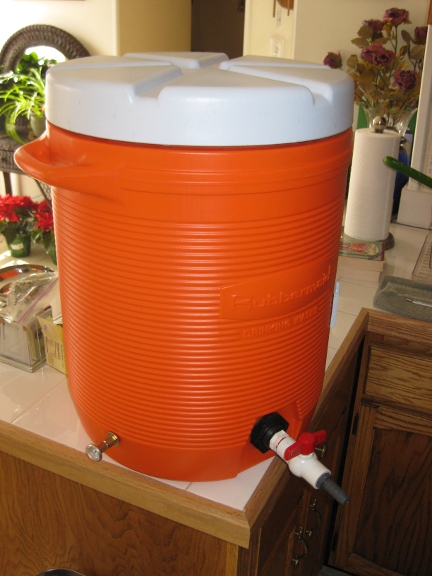
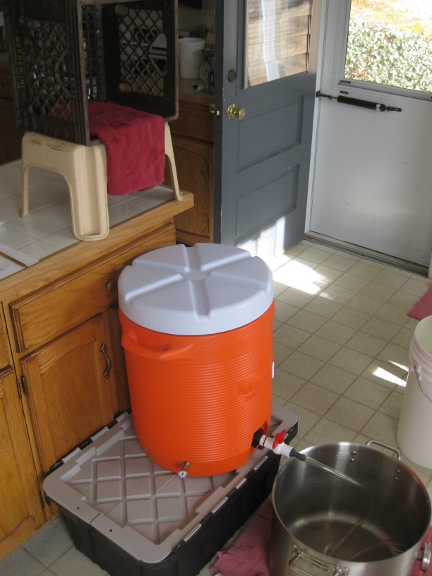
Here are some pictures of the mashing and sparging process. Again, I mashed 10 Lbs of grain with 3.5 gallons of water @ 168 degrees. It held rock steady in the Mash Tun @ 154 degrees for 90 minutes. I then sparged with 168 degree water for 45 minutes, ending up with 6 gallons of wort to boil. Of course I did most of this inside because it was below freezing outside!
Finally, we boiled it all up outside … tossed our ingredients in at the (mostly) appropriate times, and sat back and had a couple of cold ones. Here’s a few more pictures of the process. Because it is so cold in my house, I had to keep the primary fermentor up behind my bar. Oh, we did hit the projected OG pretty much right on the nose–1.052!
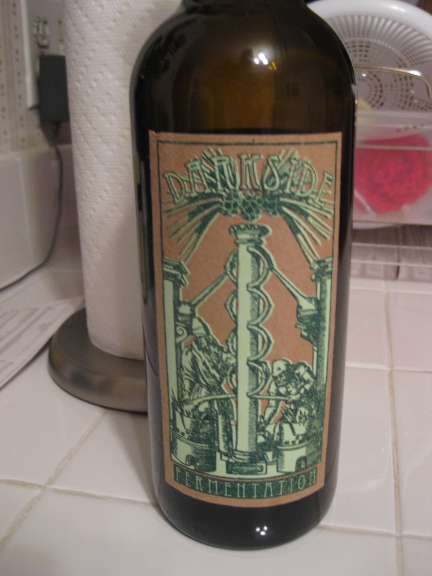
One of the brews we sampled came from The Root Cellar in San Marcos, Texas. Their local “brewery” is called Darkside…this was labeled as a Pilsner with a Belgian Twist. It was an excellent beer … my only problem was that I’ve held it for over 6 months and it is a bottle conditioned beer–it had plenty of carbonation, but the flavor was great. I will be stopping back by through there this summer.
I think I see some bubbling in that fermentor already <smile> ….

































 Beer Mentor